
Tooth fillings and cavities - everything you need to know
You’ve just finished up your routine cleaning at the dentist's, when you learn you have a cavity. Not exactly the news you wanted to hear, we know. The dentist says you need a filling, but is that really necessary?
Absolutely. Just because tooth cavities, or dental caries as we call them, are an incredibly common oral health problem (over 90% of adults have one), doesn’t mean they aren’t serious.
Let’s take a look at exactly what cavities are, how they are diagnosed, why it’s important to have them treated, and the role fillings play in restoring your tooth.
What is a cavity?
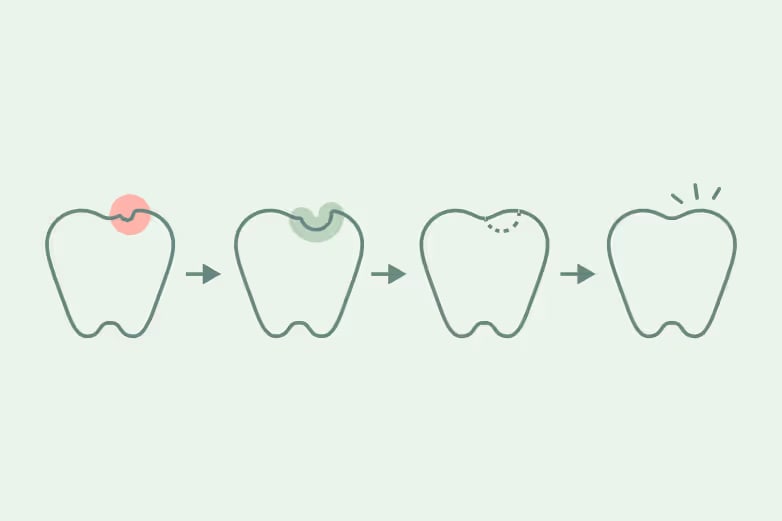
A cavity is an area on a tooth that has started to decay because of a buildup of plaque and bacteria. This decay causes a hole to form in the surface of the tooth. This damage is, unfortunately, permanent, even if the tooth doesn’t hurt yet. Sometimes you can spot cavities with the naked eye; you may even see visible holes, but the best way to know for certain if you have a cavity is to have a dental exam (which is included with every cleaning you get at Tend).
There’s a myth we’d like to bust about cavities. Just because you have one doesn’t mean you’re doing anything wrong. It’s a lot more complicated than simply avoiding sugary foods; some mouths are just more cavity-prone than others, and there are a lot of factors to consider. Brushing with a fluoride toothpaste and flossing regularly is the best way to prevent cavities, but good oral hygiene alone is not a guarantee against them. So if you have a cavity, don’t feel bad. (And we won’t try to make you.) Let’s fill it, and get you back to health.
How are cavities diagnosed?
Diagnosing a cavity is a quick, comfortable process. During your wellness visit, your dentist examines each tooth for early signs of decay, including soft spots or small surface changes that may not be visible at home. This clinical exam helps your care team detect problems early, when they’re easiest to treat.
Digital X-rays provide details your dentist can’t see with the naked eye. These images reveal the spaces between teeth and the areas under existing fillings, where cavities often form. On an X-ray, a cavity typically appears as a darker shadow in the enamel or dentin. Your dentist reviews these images with you and explains what they mean, so the diagnosis feels clear and understandable.
What are the signs that I may have a cavity?
Cavities can be subtle at first, but a few common symptoms may signal early tooth decay. You might notice:
- Tooth sensitivity to cold, heat, or sweets
- A dull ache or quick twinge in one tooth
- Food getting stuck in the same spot
- Visible changes, such as a dark spot, tiny pit, or chalky white area on the enamel
It’s also possible to have a cavity with no symptoms, especially if it’s developing between teeth or under an existing filling.
If you notice any of these signs, your dentist can confirm whether a cavity is present using a clinical exam and digital X-rays.
What is a dental filling?
“A dental filling is a simple, safe treatment used to restore a tooth that has been damaged due to a cavity,” says Tend Chief Dental Officer Dr. Chris Salierno. “We use a special material to fill the hole left by a cavity and return your tooth to its original condition.”
Which type of filling your dentist uses will depend on several factors, like your own preference, insurance coverage, and where in the mouth the filling is being placed. Molars, for example, may need a stronger filling material than other teeth. Although amalgam fillings and gold fillings have been used for hundreds of years, modern dentistry has increasingly leaned towards composite fillings, often a combination of quartz or glass bonded to a resin base. It’s what we primarily use at Tend. These restorations are durable and tooth-colored for a natural look.
What are the benefits of fillings?
Dental fillings are a safe, effective way to stop cavities from getting worse and protect your long-term oral health. When decay is left untreated, it can lead to sensitivity, toothaches, and deeper infections that require more complex care. Treating a cavity early with a filling helps keep your tooth strong, healthy, and comfortable.
Fillings do more than restore areas affected by decay. Your dentist may recommend a filling to:
- Seal small holes or defects in the enamel that aren’t caused by a cavity
- Repair a chipped or fractured tooth and restore its shape
- Improve discoloration when it affects the structure or surface of the tooth
By sealing and strengthening the tooth, a filling prevents bacteria from entering vulnerable areas and reduces your risk of future problems. At Tend, we use modern materials and a gentle, precise approach so your restored tooth blends naturally and feels comfortable right away.
Is a dental filling always required to treat a cavity?
In most cases, yes. Once a cavity forms, it cannot heal on its own. Without treatment, the decay continues to spread beyond the enamel (the hard outer layer of your tooth) and into the softer dentin beneath. As the cavity grows, it can reach the pulp, where the tooth’s nerves and blood supply are located. This often leads to significant pain and, in some cases, a dental abscess.
That said, not every spot on a tooth needs a filling right away. Dentists look closely at the location, depth, and activity of a lesion to determine whether immediate treatment is necessary or if it can be safely monitored.
A dentist may choose to monitor a minor lesion when:
- The spot is limited to the outer enamel layer
- The lesion appears inactive, stable, or non-progressive
- You have no symptoms such as sensitivity or discomfort
- Improved brushing, flossing, fluoride treatments, or sealants may help stop early decay
These “watch areas” are common, especially between teeth and in the grooves of molars. Your dentist will track them at each visit using exams and X-rays to make sure they don’t progress.
How long can you leave a cavity untreated?
“If your dentist tells you you need a filling and you’re not in any pain, that’s a very good thing,” says Dr. Chris Salierno “It means your cavity is minor enough that the fix is simple. It’s very important to treat a cavity as soon as it’s discovered. The longer you go without addressing it, the more painful, expensive, and involved the fix will be.”
In fact, one of the reasons Tend studios recommend twice-yearly visits is so your dentist can make sure no cavities are left untreated for too long. The early stages, when you still have a small cavity, represent the best times to treat it. Typically, this is before you have much tooth sensitivity and before your dental health is severely affected.
Is a filling always the best treatment for a cavity?
Often, yes. A filling is the standard treatment once decay has reached the dentin because it restores the tooth’s strength and helps protect against the progression of decay where the cavity was. But not every cavity is small enough for a filling to be the most durable option.
Dentists consider the size, location, and depth of decay to determine whether a tooth needs additional support.
A dentist may recommend:
- Inlays for cavities too large for a basic filling, but still limited to the chewing surface
- Onlays when decay affects one or more cusps and the tooth needs broader reinforcement
- Crowns when decay has weakened a substantial portion of the tooth, and full coverage is required
- Root canal therapy when decay has reached the pulp and the tooth requires infection removal before it can be restored
These treatments help protect the tooth when a filling alone would not last or may risk further fracture. Your dentist will explain what they see during your exam and on X-rays so you understand why a specific option is recommended and how it supports your long-term oral health.
How long do fillings last?
Most fillings are designed to last well over a decade, although it depends on the material used. Grinding or clenching your teeth can also shorten the lifespan of a filling. If you notice pain or sensitivity around your filling, contact your dentist to see if your filling needs to be replaced. They may do X-rays to check for any further decay under the filling.
Your dentist will also monitor your fillings at your regular dental check-ups.
Is it painful getting a filling?
“Fillings shouldn't hurt at all,” explains Dr. Chris Salierno. “We’ll apply a local anesthetic before beginning the treatment to help you stay relaxed and comfortable throughout the filling process. The pain of an untreated cavity is much, much more severe than anything you’ll feel getting a filling.”
After the anesthetic wears off, you may feel some minor soreness, but that should fade quickly.
How much do fillings cost?
The cost of a dental filling can vary, and several factors influence the final fee. Your dentist will look at the size of the cavity, where the tooth is located, and what type of filling material is best for long-term strength and appearance. Larger or more complex cavities may require additional steps, which can affect pricing.
Insurance coverage also plays a role. Many plans cover a portion of the cost for medically necessary fillings, but coverage levels differ based on your specific plan, whether the dentist's office is in-network, and the material used.
Does dental insurance cover the cost of fillings?
Yes, most in- and out-of-network insurances do cover the cost of fillings.
If you’re scheduling your filling at Tend, the studio team will let you know any costs you may be responsible for, as well as how much will be covered by insurance. (Pro tip: you can also check the cost of your treatment plan by using the Tend App!)
What to expect when you get a filling at Tend
“Getting fillings at Tend is a fast, easy process,” says Dr. Chris Salierno. “Most patients are surprised by how straightforward and painless their experience is. A minor filling only takes about 20 to 30 minutes to perform.” (If you have multiple fillings to do or deeper cavities, expect your appointment to take a bit longer.) Here’s how the process generally works.
First, your dentist will coat your mouth with a bit of numbing gel, then apply a local anesthetic. (You may feel a bit of a sting for that part, but that’s it!)
Once you’re totally numb (and zoning out to your favorite streaming show), your dentist will remove the decay. Then, they will fill the hole with the filling material and use a special light to set or harden the filling as they go. Finally, your dentist will polish the tooth, leaving it as good as new!
Cavities FAQ
-
Can you get a cavity filled while pregnant?
The American College of Obstetricians and Gynecologists and the American Dental Association affirm that routine dental treatment, including cleanings, fillings, and necessary procedures, is safe at any point during pregnancy.
If you’re pregnant or planning to become pregnant, let your dental team know during check-in so they can tailor your care and timing for the safest, most appropriate treatment.
-
How are cavities filled?
Filling cavities is a very common aspect of routine dental care. First, a dentist will dry the area of the mouth that needs the filling, then numb it.
A special drill is used to fully remove the tooth decay, then the hole in the damaged tooth is cleaned before being filled with the filling material. They’ll use a special light to set and harden the filling. Finally, the dentist checks that your bite is even and polishes the tooth. (And because all of this is done with a local anesthetic, it doesn’t hurt.)
-
How long should I expect sensitivity last after getting a filling?
It’s normal to have mild sensitivity after a filling, especially to cold, heat, or pressure. For most people, this sensitivity fades within a few days to a couple of weeks, depending on the size and location of the cavity and how close it was to the nerve.
As long as the tooth feels a little better each day, that’s a typical healing pattern. If sensitivity lasts longer than two weeks, becomes more intense, or makes chewing uncomfortable, it’s best to check in with your dentist. In some cases, the bite may need a small adjustment or the tooth may require additional care.
Your care team can evaluate the area, explain what’s causing the discomfort, and help you get back to feeling comfortable again.
-
What if I have old, large fillings?
Old or large fillings can last for many years, but they may need attention if they begin to wear down or no longer seal the tooth effectively. Small gaps or fractures can allow bacteria in, increasing the risk of new decay around the filling.
During your wellness visit, your dentist examines older fillings and reviews digital X-rays to check for breakdown. If the filling is stable, it may simply be monitored. If not, your dentist may recommend replacing it or using a stronger option, such as an inlay, onlay, or crown to protect the tooth.
Refreshing worn fillings helps maintain tooth strength and prevents more complex treatment later on.
-
Why is my tooth sensitive after getting a cavity filling?
It’s normal to experience some sensitivity after getting a filling as your mouth adjusts. Maintain good dental hygiene, regular brushing, flossing, and rinsing with fluoride mouthwash, and this should fade within a few days. If the tooth pain gets more severe or if you feel sharp pain, contact your dentist.
You may also notice pain with your bite after getting a filling. If it doesn’t subside, contact your dentist. They can smooth down the filling to line up better with your other healthy teeth, which should eliminate any discomfort.
-
How can I get rid of a cavity without a filling?
Curodont, available at our Tend studios, is an enamel remineralization treatment that repairs tooth enamel to arrest and reverse early cavities. Curodont is part of our prevention-first approach to care, helping protect your teeth and reduce the need for fillings down the road.
That said, there is no way to get rid of a cavity that has broken through the enamel without a filling or other restorative treatments. In cases of more severe tooth decay, a dentist may use an inlay or dental crown instead of a filling to correct the damage.
-
Can small cavities heal or reverse?
In some cases, very early cavities can be stopped or even reversed. This is possible only when the decay is limited to the outer enamel layer and the tooth surface is still intact. These early spots, often called non-cavitated enamel lesions, can be strengthened through remineralization. Your dentist may recommend fluoride treatments, improved brushing and flossing routines, or small dietary changes to help rebuild lost minerals.
Once a cavity has broken through the enamel or reached the dentin, it can no longer heal on its own. At that point, the damaged area must be treated with a filling or another restorative option to prevent the decay from spreading.
During your wellness visit, your dentist will examine your teeth and review digital X-rays to determine whether a spot can be safely monitored or if treatment is the best next step.
Do you think you need a filling?
Speak with our expert team during your next Tend dental exam.